
It started with pain on the inside of my ankle. A little pain in my ankle at 40-something years old after 30-plus years of practicing martial arts was not surprising, and certainly not particularly worrisome. I’ve had strains and sprains and bruises many times over the years. I’ve broken fingers and ribs and collar bones, even had an orbital fracture. So the pain in my ankle, while annoying, was not cause for concern. It was a nuisance, a bother that barely affected my early-morning mitts and gloves session with Shihan Scott.
We’d been meeting at the gym a couple of mornings a week before the sun was fully up to get in a workout before most people were even out of bed. I loved those workouts. There was no better way to start my day. But after a few weeks, the pain got a little worse and I started to notice that it was affecting my kicks. I could deal with the pain; in fact, fighting through pain provides its own rush of adrenaline. But my kicks were not as strong as they’d been a few weeks before and that bothered me. My roundhouse kick, which had always been my gold-star kick, wasn’t hitting its mark on the pad every time, and when it did it wasn’t doing so with the force that I was accustomed to. Rather, it was kind of slapping against the pad and rolling.
I made an appointment with an orthopedist, assuming I’d sprained my ankle, or at worst, after years of hard kicks against pads, bags, and people, I’d developed some arthritis. Perhaps I’d even need a cortisone shot.
After taking x-rays and doing a quick examination, the doctor basically confirmed what I’d been thinking. He put me in a boot for 6 weeks and sent me off to physical therapy. I hated to miss 6 weeks of workouts, but I figured it would be worth it in the end. I wore the boot and went to physical therapy twice a week for 6 weeks, at the end of which the pain had markedly diminished. I went back to my regular routine of early-morning workouts and thrice weekly evening karate classes.
The pain had subsided, but my kicks still weren’t as strong as they once were. Assuming I just needed to work harder, I continued to train until the pain in my ankle came back with a vengeance a couple of weeks later. Another trip to the orthopedist, and an MRI showed that I had posterior tibial tendonitis. So, it was back in the boot for another 6 weeks and back to physical therapy.
I went to a different physical therapist this time and during my initial evaluation he asked me to stand on my toes and on my heels, neither of which I could do. He asked me to walk down the hall and back. When I sat back on the table, he remarked that I had foot drop and that he thought I should see a neurologist. I was a little taken back by the suggestion and told him I assumed my being unable to move my foot up and down was due to the pain. He asked if he could take a video of me walking and send it over to my orthopedic doctor. I obliged, finished up with the appointment, and went home.
No sooner had I walked in the door when the phone rang. It was my orthopedic doctor asking me to come to his office that afternoon. I was a little annoyed about having to make the 30-minute drive back to Easton, but I did, and after walking up and down the hall again and attempting to stand on my toes and heels again, the doctor echoed the physical therapist’s belief that I needed to see a neurologist.
And so it began.
A week later I was sitting in a neurologist’s office in the same building as my ortho, baffled by how this went from tendonitis to potentially something neurological. My ankle hurt; why am I sitting in a neurologist’s office?
The doctor asked a bunch questions and conducted a thorough exam. He took several vials of blood and ordered an MRI of my knee, offering some explanation that I wasn’t paying much attention to about nerves that run from the knee to the foot and damage that may be responsible for my current symptoms.
My ankle hurts, I kept thinking. How did this go from that to possible nerve damage in my knee?
So, I had an MRI of my knee, and when that didn’t reveal any explanation for the foot drop, I had another of my brain and another of my cervical spine and another of my thoracic spine. This all happened over the course of several months, and during that time, the weakness in my foot got worse and seemed to affect more of my leg. The MRIs cast light on some interesting things inside my body: a uterine fibroid and several cysts, including a renal cyst and one on my spine that caused a bit of a panic when the doctor thought it might be a tumor. He ordered another MRI, this time with contrast, to get a better look. Just a cyst, he concluded. No tumor. Thank God.
After ruling out things like tumors and Lyme disease and vitamin deficiencies and multiple sclerosis, the doctor decided I should be seen by a neurologist in one of the Boston hospitals. The thought now was that this could potentially be an autoimmune issue. So, into the city I went and was subjected to more tests, more poking and more prodding. I had vials of blood taken, underwent a PET scan, had an evoked potentials test and an EMG. Finally, the test I’d been dreading: the lumbar puncture. It is as dreadful as it sounds. Actually, I shouldn’t say that. The test itself wasn’t too bad. Mostly because I was so high on Xanax (prescribed) that I barely remember it. The recovery, however, was a flaming bag of suck.
At the end of this battery of tests, I was told that it was time for me to be seen by Dr. Berry at the motor neuron clinic. By now I had foot drop in both feet, my left side was markedly weaker all the way up my leg, and the right was becoming noticeably weaker. My left hand was also affected.
Until this point, I never doubted that I would be back in the dojo at some point, back to my early-morning workouts, back to classes at night, back to normal life. Eventually some doctor would figure out what this was, give me a pill or a shot, and I’d be on my way.
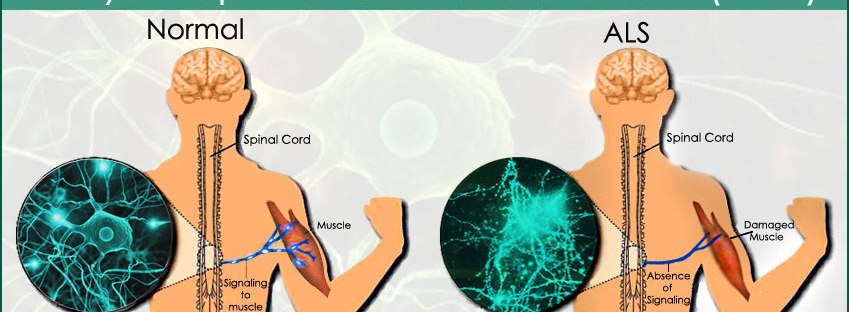
My first visit with Dr. Berry left me feeling that this might not be as a quick a fix as I thought. After going over my history and giving me a very thorough exam, Dr. Berry started talking to me about motor neuron disease. His explanation was scientific, but in terms I could understand. My symptoms, he explained, were mostly upper motor neuron. His tentative diagnosis at the end of the visit was primary lateral sclerosis, or PLS. I’d never heard of PLS, but from what I understood from his explanation, it was progressive and would affect my voluntary muscles. Any strength or function that I’d lost I would not be getting back.
Several months later, on July 24, 2018, I was back at Dr. Berry’s clinic for a follow-up. After asking about any progression over the last 3 months, he started the exam. The exam was like the others I’d had to this point: he tested my reflexes, my strength, all the usual things. When I opened my mouth and stuck out my tongue, he seemed to stare at it for an inordinately long time. He took a closer look at my hands, then back to the tongue. He had the fellow that was shadowing him that day take a look. It was a little disconcerting really.
After spending some time typing up some notes on the office computer, Dr. Berry told me that I was exhibiting some lower motor neuron signs now and that he was changing my diagnosis to upper motor neuron predominant ALS. That one I’d heard of. My heart sank when he said it, but he explained that my progression was comparatively slow and that this change in diagnosis opened up some treatment opportunities for me that otherwise would not have been available. That’s a silver lining. I guess.
So, part of the process of me dealing with this diagnosis is definitely going to include writing, because for me that has always been the strongest tool in my arsenal when I have to deal with life’s little surprises, for better or for worse. Some of the posts will deal with how ALS is affecting me on a given day and some won’t, because ALS is what I have, it’s not who I am. For anyone reading this: thanks for stopping by, and feel free to drop me a line with questions or comments.

 Rise Against ALS!